
If you've been going back and forth on whether to add an outdoor fire pit, an indoor fireplace, or both, we've got you covered!
Both are great options and bring something different to the table. The best setup for most Midwest homeowners actually includes one of each, but before we get there, let's break down what each one actually offers and where each one falls short.
The Outdoor Fire Pit
The Pros
- It's a social magnet. Fire pits naturally pull people together. Neighbors wander over, kids put their phones down, and summer memories are made.
- Affordable to get started. A solid, good-looking fire pit can be set up for as little as $100. Even premium built-in options cost far less than a full fireplace installation.
- No ventilation required. No chimney, no liner, no permits needed for most portable setups. You just set it up and enjoy.
- Tons of style options. Round, square, sunken, raised, stone, steel, propane, wood-burning — there's a style to fit any backyard.
- You can cook on it. S'mores are just the beginning. Add a grill grate, a dutch oven, or skewers and you've got a serious outdoor cooking setup. (check out these outdoor fire pit essentials!)
- Extends your outdoor season. A fire pit adds weeks to your outdoor entertaining on both ends of the warm-weather calendar.
The Cons
- Weather-dependent. Rain, wind, and cold winters will keep you inside. A surprise spring storm doesn't care about your plans.
- Smoke can be unpredictable. Wind direction changes, and no one enjoys sitting in a smoke cloud all evening. Positioning your fire pit matters.
- Some maintenance involved. Wood fires mean ash cleanup and keeping logs dry. Propane is easier but requires tank management.
- Check local rules first. Some neighborhoods and municipalities have restrictions on open burning. A quick check before you build saves headaches.
The Indoor Fireplace
The Pros
- Works in any weather. Blizzard outside? Perfect fireplace night. Your indoor fireplace doesn't care what the forecast says.
- Real heating power. A well-designed fireplace or insert can meaningfully heat a room — or a zone of your home — reducing how hard your furnace has to work.
- Adds home value. Fireplaces are consistently one of the top features homebuyers want. A quality installation is a genuine investment in your property.
- Defines the room. A beautiful surround, mantel, and hearth become the focal point of any living room, bedroom, or den. Even when your fireplace isn’t in use for the season you can still use the mantel for decoration purposes!
- Low-maintenance options available. Gas inserts and electric fireplaces give you the look and warmth with far less upkeep than a traditional wood-burning unit.
- Backup heat when you need it. When the power goes out in winter, a wood-burning fireplace gives you real peace of mind.
The Cons
- Higher upfront cost. A proper installation is a real investment, especially masonry builds. Even gas insert units require professional installation.
- Chimney maintenance. Wood-burning fireplaces need annual inspections and cleaning to prevent creosote buildup and ensure safe operation.
- Can lose heat when not in use. An unsealed chimney acts like an open window in your wall. Good dampers and flue seals are essential.
Quick Comparison
| Category | Outdoor Fire Pit | Indoor Fireplace |
| Best Season | Spring – Fall | Fall – Spring |
| Starting Cost | $200–$3,000+ | $1,500–$10,000+ |
| Installation | DIY-friendly | Pro recommended |
| Ambiance | Outdoor, social | Cozy, intimate |
| Heating Power | Minimal | Significant |
| Maintenance | Low–moderate | Moderate (wood) / Low (gas) |
| Home Value Boost | Modest | Noticeable |
Why Not Both?
We’d argue that an outdoor fire pit and an indoor fireplace actually complement each other perfectly! Together, they give you a fire feature for almost every situation, one for warm-weather entertaining and one for cold-weather comfort.
How to Set Up Your Own Outdoor Fire Pit
Spring is a great time to get a fire pit going before outdoor season really picks up. Here are three approaches depending on how much time and budget you want to put in:
Option 1: The Instant Setup
Pick up a quality portable steel fire pit bowl from any hardware or home improvement store, set it up somewhere flat and away from structures, and you're done. Look for one with a spark screen, good airflow vents, and at least a 30" diameter.
A few things to keep in mind:
- Keep it at least 10 feet from your house, fence, and any overhanging branches.
- Set it on gravel, pavers, or concrete, not directly on a wood deck.
- Keep a garden hose or bucket of water nearby.
- Always use a spark screen when people are sitting around it.
Option 2: DIY Stone Ring
A classic look that feels permanent without requiring permits in most areas. Beginner-friendly and a real backyard upgrade.
What you'll need: retaining wall blocks or fire ring stones (36–40 for a 4-foot ring), gravel for the base, marking paint, a shovel and a level, and optionally a metal fire ring insert.
Steps:
- Mark a circle 4–5 feet in diameter, at least 10 feet from any structure.
- Dig down 6–8 inches and fill with 4–6 inches of compacted gravel.
- Place your first ring of stones, checking for level as you go.
- Stack 2–3 more rows, offsetting joints like brickwork for stability.
- Fill the center with gravel or sand, and you're ready to go.
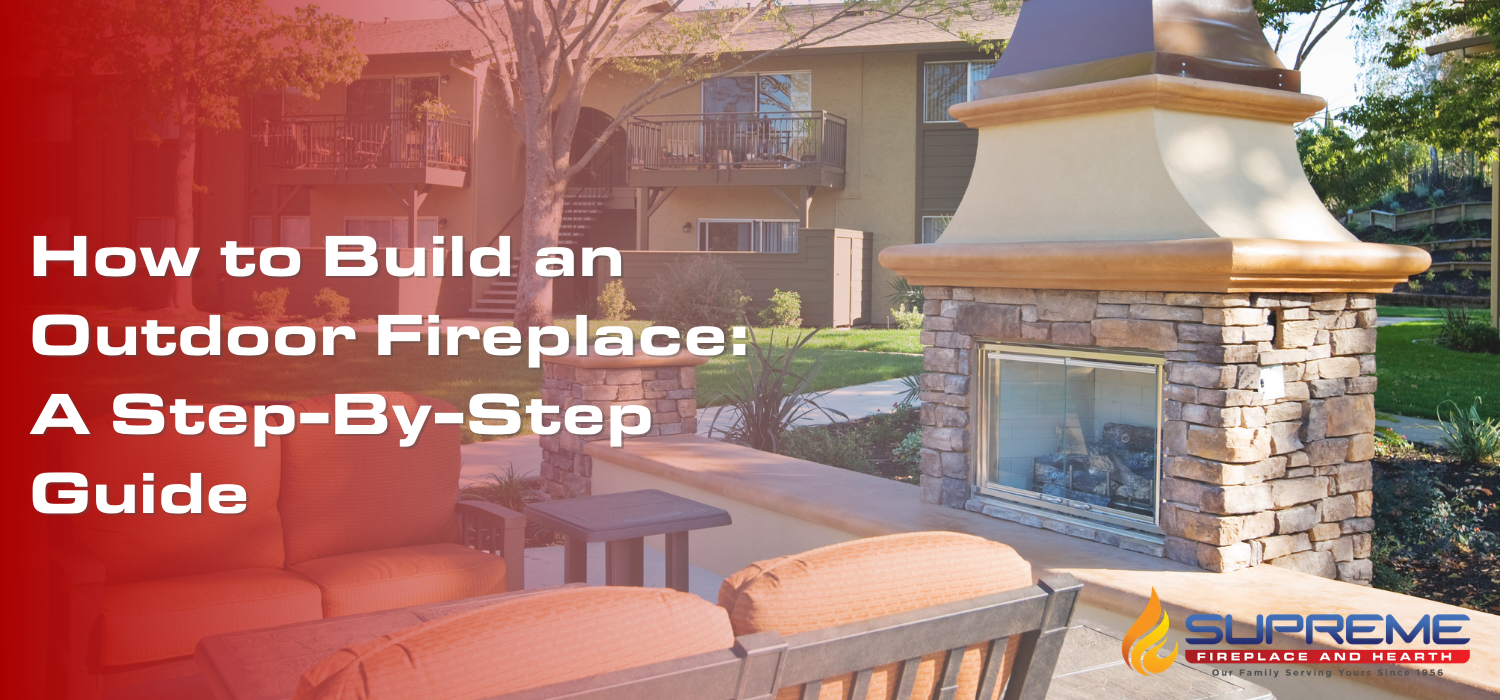
Option 3: The Outdoor Fireplace Build
This option is a bit more involved!
We created a step-by-step guide on how to build an outdoor fireplace
Check it out:
Important Fire Safety Tips to Remember
- Never burn treated wood, painted wood, or trash — toxic fumes and potential damage to your pit.
- Keep fires manageable — a smaller, hotter fire is safer and more enjoyable than a raging bonfire.
- Keep lawns watered & mowed — healthy grass is less likely to catch on fire
- Never leave a fire unattended — fully extinguish all embers before heading inside.
- Get your chimney inspected every year — especially if your fireplace sat unused all summer.
- Use seasoned hardwood — oak, hickory, and ash burn hotter and cleaner. Especially important for indoor fireplaces.
- Check local burn ordinances — some cities have seasonal restrictions on outdoor fires.
Set Up Your Home With the Perfect Fireplace
At Supreme Fireplace, we help homeowners make the most of both. Whether you're looking to install a beautiful indoor fireplace, upgrade to a gas insert, or want guidance on the right outdoor fire feature for your space, we're here to help!